Low-Temperature Cure Automotive Coatings: What Formulators Should Validate
Low-temperature cure automotive coatings moved into the industry spotlight on 23 September 2026, when PPG announced that it had showcased a new platform at SURCAR Asia in Shanghai. According to PPG, the platform offers two routes: a stand-alone basecoat designed to cure at 110°C and a three-layer system designed to cure together at 90°C, compared with standard higher-temperature processes at around 140°C.
The headline is lower oven temperature, but the formulation challenge is wider. A practical system must still deliver cure, intercoat adhesion, appearance, colour harmony and long-term durability across metal bodies and heat-sensitive plastic components. PPG says production-line trials with automakers are the next step, so the announcement should be read as a strong technology signal—not proof of universal, full-scale adoption.
This article provides general technical information. Cure schedules, performance claims and production suitability should be verified for the complete coating system, substrate and line conditions.
23 SEPTEMBER 2026 MARKET SIGNAL
What PPG reported
A stand-alone basecoat at 110°C and a three-layer co-cure system at 90°C, positioned against higher-temperature processes at around 140°C.
THE COMMERCIAL REALITY
What still needs proof
PPG plans line trials with automakers worldwide. No universal energy-saving percentage or commercial rollout date was disclosed, so every benefit remains line- and platform-specific.
Why a lower cure temperature changes more than the oven setting
Coating cure is a balance among reaction rate, film formation, solvent or water release, catalyst response and the time-temperature history of the part. Lowering peak metal temperature without redesigning that balance can leave a film that looks acceptable at the line exit but has incomplete crosslinking, weak intercoat bonding or reduced resistance later.
For resin and additive suppliers, this means the useful specification is not simply “cures at 90°C.” It is the full window: temperature, dwell time, film build, humidity, flash-off, substrate, pretreatment and the layers above and below. Our guide to improving coating performance with high-performance resins explains why system interactions matter as much as any single raw material.
Five formulation questions for low-temperature cure automotive coatings
1. Can reactivity increase without sacrificing stability?
Faster low-temperature crosslinking may require changes in resin functionality, catalyst selection or crosslinker balance. The formulation still needs practical storage stability, circulation stability and resistance to viscosity drift. A laboratory cure result is not enough if the coating becomes difficult to store, pump or apply under plant conditions.
2. Does the system cover both metal and plastic substrates?
Metal bodies and plastic bumpers differ in heat tolerance, surface energy, pretreatment and dimensional response. A broader cure window can support more integrated painting, but adhesion and flexibility must be confirmed on each actual substrate and primer. Suppliers should request the polymer grade, mould-release history and pretreatment—not just the generic word “plastic.”
3. Are flash-off and film formation still robust?
A lower-temperature bake can change how residual water or solvent leaves the film. Poor balance may show up as popping, pinholes, mottling, gloss loss or sagging. Rheology modifiers, wetting agents, defoamers and co-solvent choices therefore need to be evaluated together with booth humidity, flash-zone air movement and line speed.
4. Will colour and appearance match across substrates?
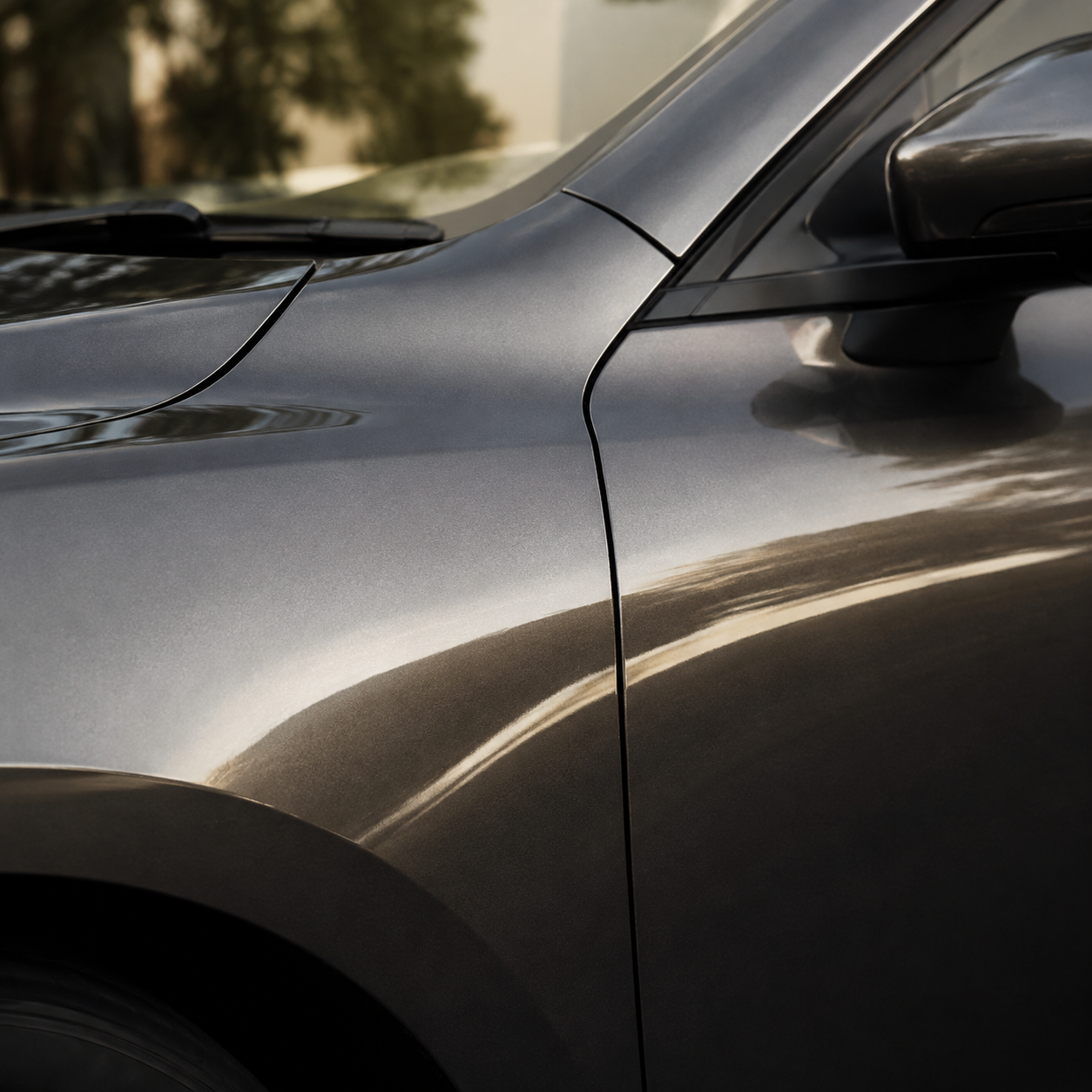
Body-and-bumper integration is valuable only when the finished vehicle reads as one surface. Pigment orientation, film thickness, substrate colour, electrostatic application and bake history can all affect flop, gloss and perceived shade. Metallic and effect colours need multi-angle measurements as well as visual review under controlled lighting.
5. Does the complete layer stack cure as a system?
Primer, basecoat and clearcoat should be treated as one chemical and mechanical stack. A co-cure route can create efficiencies, yet it also makes interlayer compatibility, controlled migration and reaction sequence more important. Compatibility screening, similar in principle to resin compatibility work in solvent-based formulations, should be followed by complete panel and line trials.
A seven-point validation plan
- Map the real thermal profile. Record part temperature, dwell time and temperature variation rather than relying only on oven air setpoint.
- Build a substrate matrix. Include representative metals, plastics, primers, pretreatments and film builds.
- Measure cure response. Combine solvent resistance, hardness, adhesion and appropriate analytical methods across the proposed bake window.
- Check application robustness. Challenge atomisation, transfer efficiency, flash-off, sag, popping and defect sensitivity at realistic line conditions.
- Verify appearance and colour harmony. Review gloss, orange peel, DOI and multi-angle colour across every substrate.
- Run durability testing. Confirm humidity, water, chemical, UV, thermal-cycle, stone-chip and repair performance required by the vehicle programme.
- Quantify the line case. Compare energy use, throughput, reject rate, maintenance and rework against a documented production baseline.
Laboratory gate
Define the minimum acceptable cure, adhesion, appearance and resistance window on representative panels before using “low-temperature cure” as a purchasing claim.
Production gate
Confirm the window on actual parts and line profiles, then track energy, quality and rework data. A lower setpoint is valuable only when the complete process remains capable.
What buyers should request from suppliers
A strong technical package for low-temperature cure automotive coatings should state the resin and crosslinker platform, recommended catalyst range, solids and viscosity, application method, flash conditions, minimum and target bake schedules, compatible substrates, colour limitations and test methods. Buyers should also ask which claims were generated on laboratory panels, pilot lines or full production lines.
Energy claims for low-temperature cure automotive coatings need the same discipline. PPG described its lower-temperature routes as a more energy-efficient alternative, but its announcement did not provide a universal saving percentage. Actual savings will depend on oven design, line loading, cure time, plant energy mix and whether process integration removes other steps. The credible question is therefore “What changed on this line?” rather than “What is the headline percentage?”
Where Most Chemical fits
Most Chemical supports coating formulators with specialty resins, pigments and additives selected around the substrate, application method and performance target. For low-temperature cure automotive coatings, a useful brief includes the complete layer stack, metal and plastic grades, pretreatment, spray process, flash conditions, available oven profile, colour family and durability specification.
The wider lesson from this 2026 announcement is clear: future paint-shop efficiency will come from coordinating chemistry and process, not from changing one setpoint in isolation. Suppliers that can connect resin reactivity, application behaviour, cross-substrate appearance and line data will be better positioned to support the next stage of automotive coating development.
Build a low-temperature cure evaluation brief
Share your resin, pigment, additive, substrate and performance requirements with the Most Chemical team.